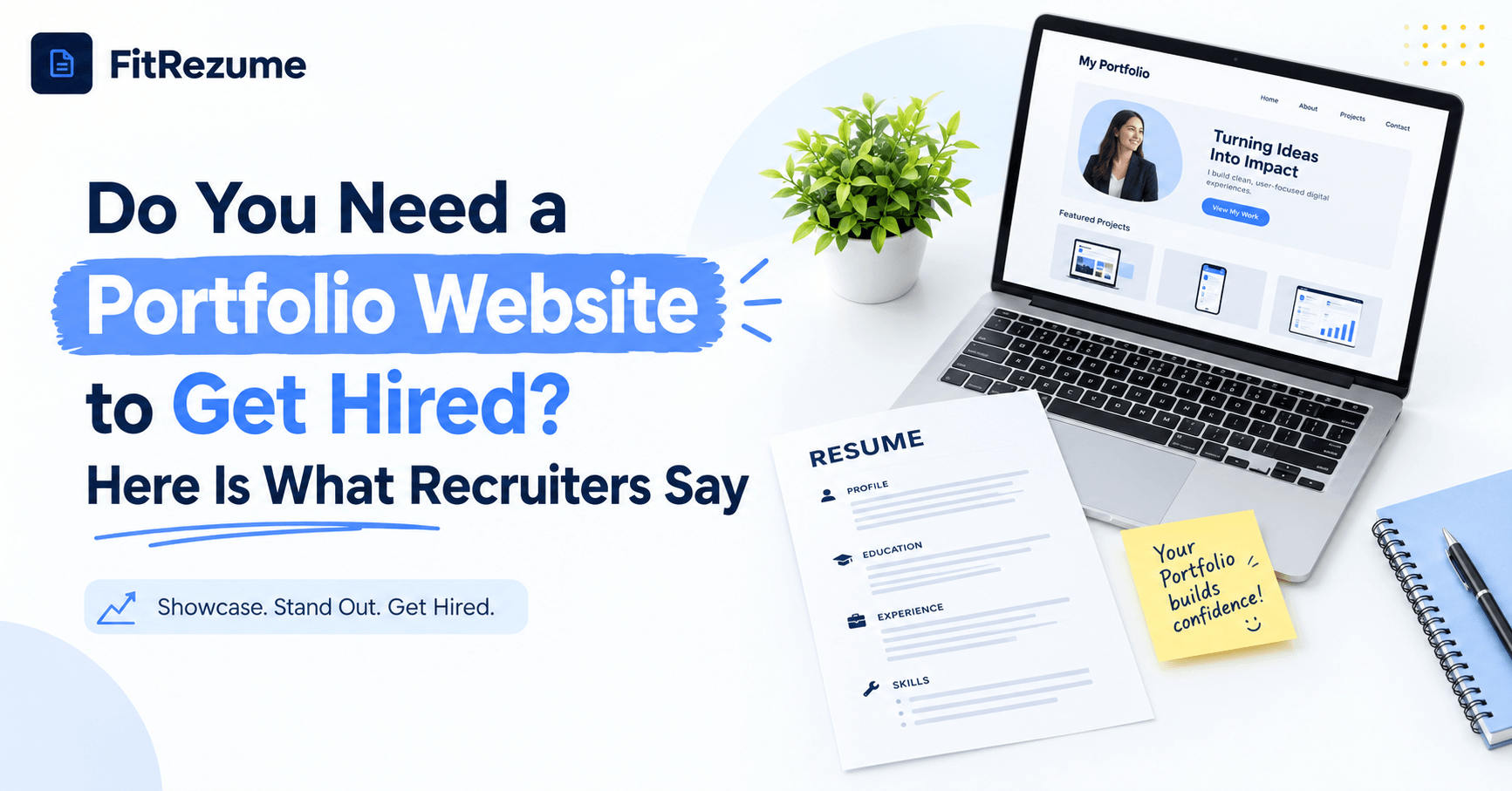
Picture two candidates with the same degree, the same internship and almost the same resume. One sends a plain PDF. The other adds a link that opens a neat page with real projects, results and a short bio. Guess whose profile gets a second look? A simple online portfolio maker in India can put you in that second group, and recruiters are paying more attention to this than most job seekers realize.
Still, the question keeps popping up in job forums and career groups. Is a portfolio website really required, or is it just extra homework? Let's look at what hiring professionals say, which roles gain the most from one, and how to build yours without losing a month of weekends.
How a Web Portfolio Builder Helps You Get Noticed by Recruiters?
Here's the honest answer first. A portfolio website is rarely listed as a strict requirement, except in creative and tech roles. But recruiters keep repeating one idea: it gives them another way to understand who you are beyond a one-page resume.
The numbers back this up. Research shared by Nominet found that 88% of HR professionals are more likely to hire, or move ahead with, a candidate who talks through their experience using a portfolio. Yet only 31% of the graduates surveyed had an online portfolio. That gap is your opening.
A survey by Format, answered by hiring managers, advisors and recruiters, points the same way. A portfolio isn't compulsory, but a strong one helps you stand out, while a weak one can quietly hurt your chances. So quality matters more than simply owning a link.
Think about how screening works. A popular opening can attract hundreds of applications, and the first look at each profile often lasts well under a minute. A resume lists claims. A portfolio shows proof, so the recruiter doesn't have to guess.
When recruiters do open a portfolio, they tend to look for three things: relevance, clarity and results. Relevance means projects close to the job you want. Clarity means they can understand your role in under a minute. Results means numbers, outcomes or feedback.
Don't assume portfolios are only for creatives. An HR executive can show a hiring process she redesigned, cutting time to hire from 45 days to 30. A data analyst can publish a dashboard with a short write-up. A sales professional can share quota results and client testimonials.
For designers, developers, writers, photographers and video editors, a portfolio is close to mandatory. For marketing, product, data and HR roles, it works as a bonus that separates you from a pile of similar resumes.
One warning, though. A broken link, an unfinished page or a project with no explanation can cost you more than having nothing at all. An outdated page with a 2019 copyright line tells a recruiter that you don't maintain your work.
How Freshers Can Show Real Proof of Skill With a Free Portfolio Maker?
If you're a student or a fresher, you probably don't have a long work history. That is exactly where a portfolio does the heavy lifting. A simple free portfolio maker in India lets you publish class projects, internship work and personal experiments without paying a developer.
Imagine a final-year marketing student who manages an Instagram page for a local bakery. She shows growth from 400 to 2,100 followers in three months, adds two sample campaigns and writes a short note on what worked. She has no full-time job yet, but she has numbers, visuals and a story.
Compare that with a resume line that says "handled social media". Same effort, very different impact. The portfolio turns a vague claim into something a hiring manager can actually judge.
Three projects are enough to start. Add one from a course, one from an internship or volunteer work, and one personal project. That mix shows learning, real-world exposure and initiative.
Picking the Best Web Portfolio Builder Without Wasting Weeks
This is where many people get stuck. They spend three weeks choosing fonts and colour palettes while the actual projects stay half written. The goal isn't a fancy website. The goal is a clear page that answers a recruiter's questions fast.
Most recruiters want four answers: what you do, what you've built, what results you got and how to reach you. If your page covers all four within one scroll, you're already ahead of most applicants.
That is why an online portfolio maker in India should save you time instead of adding chores. FitRezume brings your CV, LinkedIn review and portfolio together, so you aren't juggling five different tabs and logins.
Here's what a recruiter-friendly page usually includes:
A one-line headline that says who you are and what you do
Three to five of your strongest projects, not fifteen average ones
A short case study for each, covering the problem, your role and the result
A downloadable resume and a working contact link
Links to LinkedIn, GitHub or any profile that adds proof
Keep each case study simple: the problem, what you did, the tools you used and the result. Aim for 150 to 200 words per project. If you can add one number, such as "cut report time by 40%", do it.
What to Check Before You Trust a Web Portfolio Builder Online?
Not every tool deserves your time. Before you commit, run a quick test with one dummy project and see how it feels. A good builder should make editing easy, not turn each update into a mini project.
Mobile view: open the draft on your phone first, because plenty of recruiters check links between meetings
Speed: a page that crawls will lose a busy reader within seconds
Clean link: a short, readable URL looks better on a resume than a long string of random characters
Easy edits: you should be able to swap a project in under 10 minutes
Light branding: heavy tool logos make your work look like a template
Privacy: you should be able to hide details like your phone number if you prefer
Spend 30 minutes on this test and you'll avoid weeks of regret later. If the tool fights you on day one, it will fight you every time you apply.
Why a Free Portfolio Maker Is Enough for Your First Version?
Your first portfolio doesn't need a custom domain, fancy animations or a paid plan. It needs three solid projects, a clear headline and a way to reach you. Many candidates wait for the perfect version and miss months of applications.
Free doesn't have to mean low quality. Pick a simple layout, use two fonts at most, keep plenty of white space and let your work be the star. Recruiters care about what you show, not how many effects your page has.
Try this simple one-week plan:
Day 1: Pick your three best projects
Days 2 and 3: Write a short case study for each one
Day 4: Choose a clean template and add your photo and bio
Day 5: Add your resume link and contact details
Day 6: Test everything on your phone and ask a friend to click through
Day 7: Publish and add the link to your resume and LinkedIn
Then watch for the usual mistakes. Too many weak projects, missing context, broken links and outdated work cause most of the damage. A good rule of thumb: if a project doesn't make you proud, remove it.
How the Best Web Portfolio Builder Fits Into a Complete Job Search?
A portfolio doesn't replace your resume. Recruiters still scan the resume first, and applicant tracking systems read it before any human does. The portfolio is your second step, the one that turns interest into an interview call.
Place the link in three spots: your resume header, your LinkedIn featured section and your email signature. When all three tell the same story, you look organised and serious about the role.
This is where FitRezume helps, since it combines an ATS-friendly CV builder, LinkedIn profile review and portfolio page in one platform. You keep one consistent identity instead of patching together tools that don't match.
When you apply, mention one relevant project in your cover note, for example: "I recently built a budgeting dashboard that cut month-end reporting by two hours." That gives the recruiter a reason to click.
Update the page every quarter. Add one new project, refresh your headline and check each link. It takes about 20 minutes and keeps the page current for every recruiter who clicks.
Conclusion
So, do you need a portfolio website to get hired? Not always, but recruiters clearly say it helps, especially when your resume is light on experience. A focused page with three strong projects can beat a long list of vague claims. The real risk isn't skipping a portfolio, it's publishing a rushed, messy one. Take a week, show your best work and let the proof speak for you.
Start small, keep it clean and use an online portfolio maker in India that doesn't eat your week. If you want your CV, LinkedIn and portfolio working together, FitRezume is a practical place to begin.
Frequently Asked Questions
Is a portfolio website necessary to get a job?
Not always, but it strongly helps in creative, tech and marketing roles and can set you apart in almost any field.
What should I put on my portfolio as a fresher?
Add three strong projects with short case studies, a clear headline, your resume link and one easy way to contact you.
How many projects should a portfolio have?
Three to five well explained projects work better than a long list of average ones.
Do recruiters really open portfolio links?
Many do, especially after a resume catches their eye, so make sure your link is correct, fast and mobile friendly.
How often should I update my portfolio?
Review it every three months and add a new project or result whenever you finish meaningful work.